Police Vehicle Replacement Standards guide agencies in deciding when to rotate patrol and support fleets, balancing safety, reliability, cost control, and regulatory expectations. This guide explains how standards are typically built, what to document during replacement planning, and how to find and compare discounted vehicles. It also summarizes key purchasing steps using reputable car trading websites.
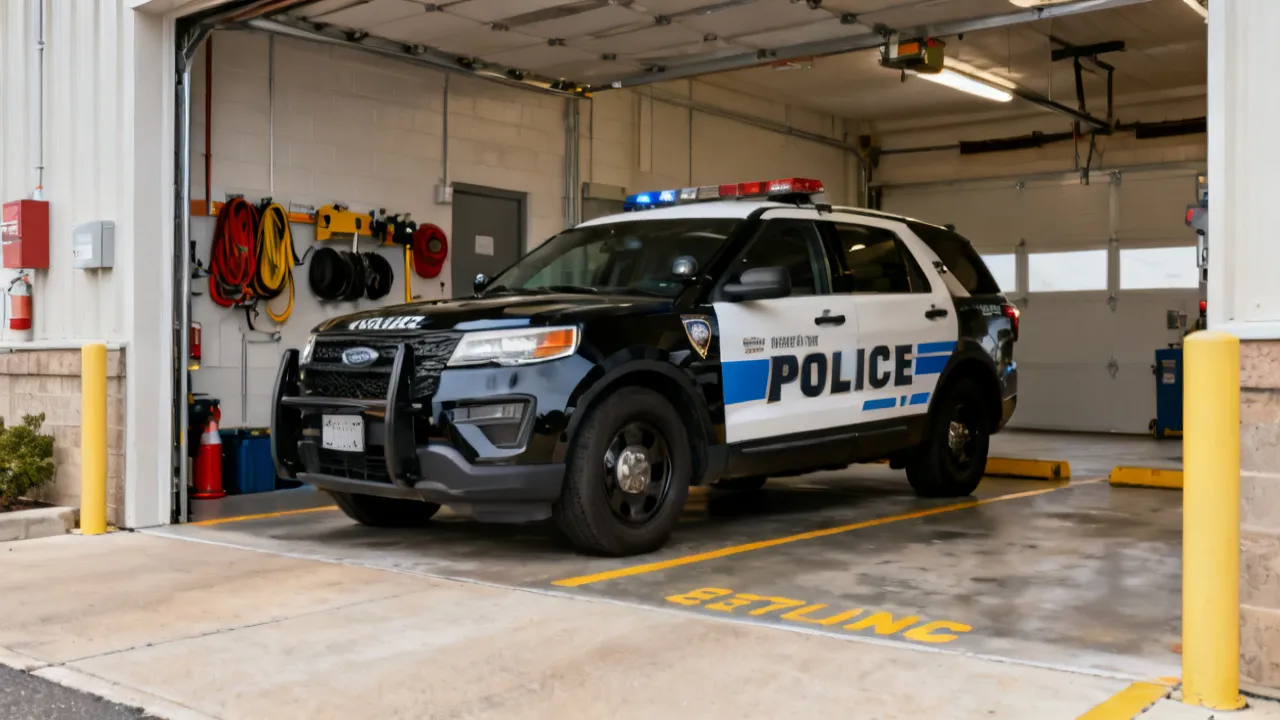
Police Vehicle Replacement Standards are more than internal policy—they’re a structured approach to determine when to retire, purchase, or refurbish vehicles so that operational readiness stays high while lifecycle costs remain predictable. From an industry perspective, the strongest programs treat replacement as a data-driven fleet lifecycle decision: accident exposure, safety inspection results, maintenance trends, parts availability, and total cost of ownership (TCO) are reviewed together rather than in isolation.
In practice, agencies typically establish criteria for patrol vehicles and support vehicles (e.g., command units, transport, specialty vehicles) using a combination of age, mileage, condition inspections, maintenance history, and availability requirements. The goal is consistent vehicle performance—especially for high-demand periods—without unnecessary early replacement that strains budgets.
However, the modern reality is that replacement is rarely a simple “calendar” event. Police work concentrates wear, compresses downtime tolerance, and demands reliable communications and safety systems. At the same time, supply chains, equipment integration requirements, and the economics of parts and labor change over time. Therefore, the best Police Vehicle Replacement Standards act like a decision framework: they help an agency understand risk and cost at the same time and make defensible choices that can withstand audit, public scrutiny, and operational stress.
Replacement decisions must prioritize operational safety and service continuity. A vehicle nearing the end of its expected lifecycle can become a liability in several ways:
Accordingly, the very defensible standards align replacement thresholds with the agency’s risk tolerance and response requirements. If downtime has a direct impact on public safety service levels, the program should reflect that urgency.
Operational continuity is not only a “drive it until it fails” issue. It’s also about dispatch confidence, the ability to staff coverage reliably, and the ability to respond to incidents without scrambling for alternative vehicles. In many agencies, a vehicle’s true “value” is measured in how reliably it shows up for duty when needed, not in what it costs on paper to maintain during low-demand periods.
For example, a patrol sedan that passes an inspection but fails repeatedly during storm seasons—when staffing is already constrained—may impose a high readiness risk. Similarly, a command unit that has rare but severe electrical faults (intermittent alternator issues, battery drain, radio power instability) may carry disproportionate mission impact. Police Vehicle Replacement Standards should therefore incorporate not only average reliability but also the consequences of failure, the probability of failure in mission-critical contexts, and the expected time required to restore service.
While specific thresholds vary by jurisdiction, industry-standard fleet management frameworks often evaluate the following categories:
Many fleets use a maximum service life window based on vehicle age and accumulated mileage. Age alone doesn’t tell the full story—some vehicles may have low miles but extensive idle time, heavy-duty cycles, or harsh environmental exposure. Conversely, high-mileage vehicles with excellent maintenance may perform better than a neglected lower-mileage unit. For that reason, age/mileage thresholds are usually treated as triggers for deeper inspection, not automatic retirement orders.
There are two common ways agencies apply age/mileage triggers. One is a “hard cap,” where vehicles must be retired at a specified point regardless of condition. The other is a “soft cap,” where vehicles become eligible for accelerated replacement review if they cross defined milestones. Most mature programs prefer the soft-cap approach because it keeps decision-making tied to evidence: if a unit is aging but still performing within acceptance standards, the agency may extend service, reassign to lower-demand roles, or schedule refurbishment at a lower cost.
That said, the hard-cap philosophy can still be appropriate for safety-critical components that become difficult to certify or service after certain intervals. For instance, older vehicles may require more frequent brake system replacement or may have structural corrosion thresholds that cannot be reliably remediated. In these cases, age-based retirement helps reduce uncertainty and improves predictability for replacement planning.
Professional fleet programs use standardized inspections covering:
From an expert lens, this is where Police Vehicle Replacement Standards become very objective: a vehicle’s documented condition frequently predicts future reliability more accurately than age or mileage alone.
To make condition inspections truly defensible, agencies usually standardize the scoring and decision language. For example, they may define “pass,” “marginal,” and “fail” outcomes for each inspection category, then link those outcomes to explicit actions: extend service for passes, place on a reinspection schedule for marginal cases, and retire or overhaul for fails. A repeatable scoring rubric also helps reduce inconsistency between mechanics, inspectors, and contractors.
Condition inspections should also address the “police-specific reality” of the vehicle. Standard inspections might focus on general road safety. Police fleet inspections must additionally evaluate emergency equipment mounting integrity, wiring harness integrity and strain relief, secure attachment of light bars and sirens, and the vehicle’s ability to support installed power demands. A vehicle can technically be roadworthy while still being unsafe in its outfitted police configuration.
Replacement becomes economically sensible when maintenance costs begin to rise faster than expected. Rather than reacting to a single expensive repair, the top programs analyze:
This trend-based approach supports a replacement narrative that is transparent for budgeting, audits, and governance.
Maintenance trend analysis improves cost forecasting because it reduces the chance that a decision is driven by one-off anomalies—such as a single cooling system replacement after an overheating event. Instead, the agency asks: is this repair pattern changing the cost curve? If the fleet’s repairs are rising year-over-year for specific categories, then the vehicle is entering a period where multiple systems are likely to fail in sequence.
Many agencies also incorporate “maintenance type” indicators. Preventive maintenance done correctly may indicate a healthier aging process than vehicles with sporadic service history. Diagnostic labor and repeated failures often signal that the fleet is spending time and money chasing intermittent faults that are hard to predict—exactly the kind of problem that can threaten readiness.
Some programs adopt a “maintenance escalation factor,” which is a ratio comparing current-year repair spend to baseline historical spend for similar vehicles. If the ratio exceeds a defined threshold, replacement review is triggered. Others use “repair cost per mile” or “repair cost per day in service,” which can be particularly helpful when idle time differs between fleets.
For police operations, vehicle availability can be as important as fleet cost. A vehicle that’s “still running” but unavailable during peak coverage windows may be less valuable than a slightly newer unit that’s more reliable. Replacement standards should incorporate service schedules, call volume patterns, and downtime tolerances.
Availability is influenced by multiple factors: failure frequency, repair turnaround time, parts lead times, whether the agency has access to loaner vehicles, and how well the maintenance program is integrated with procurement. Two vehicles could have similar maintenance costs but very different availability profiles. For example, a vehicle with predictable wear items but fast parts availability might be more available than a vehicle that requires rare parts that can’t be sourced quickly.
To operationalize availability, agencies commonly track metrics such as:
These metrics connect replacement timing directly to service delivery. A mature program treats availability shortfalls as a strong evidence type in replacement recommendations—sometimes stronger than cost alone.
Safety and regulatory obligations are non-negotiable. Agencies should ensure replacement planning accounts for:
Even when a vehicle seems cost-justified to keep, compliance constraints can force earlier retirement.
Compliance isn’t just about passing inspections. It also includes the practical ability to correct safety issues within a reasonable time and with parts that are available and serviceable. For example, a recall that requires specialized parts may create an operational risk if the parts are delayed. Similarly, certain structural corrosion risks may be difficult to certify if an agency can no longer rely on standard repair procedures or if professional assessment indicates limited remaining integrity.
Police Vehicle Replacement Standards should explicitly define how compliance items are handled. Common approaches include: “automatic replacement triggers” for non-fixable safety failures, a defined timeline for “fix or retire” decisions for fixable items, and documented escalation for compliance issues that threaten readiness.
Police Vehicle Replacement Standards typically succeed when they specify a repeatable process. A strong policy often includes:
This structure helps avoid “ad hoc” decisions that can lead to inconsistent outcomes across departments or fleet segments.
In many agencies, the process is the real differentiator. A good fleet replacement program is less about selecting the perfect age threshold and more about ensuring the decision is made consistently, using the same evidence types, with a clear justification path. When budgets face scrutiny, this consistency protects the agency from charges that decisions were arbitrary, biased, or inconsistent across vehicle categories.
To operationalize the process, agencies often implement a formal lifecycle status review. For example, vehicles may be reviewed semiannually or annually. As the vehicle approaches trigger points, it may move from “routine maintenance” status into “enhanced monitoring” status. In enhanced monitoring, the vehicle might require increased inspection frequency, more detailed repair documentation, and more frequent availability reporting.
Another process improvement is to define the “replacement recommendation categories.” A fleet replacement committee may issue recommendations in one of several categories: extend, extend with restrictions, reassign, refurbish, or replace. Each category should have defined conditions and decision criteria, reducing ambiguity.
When you replace vehicles—especially if you plan to reduce purchase costs—inventory sourcing matters. Below is a comparison table of official car trading websites where agencies and fleet managers can review current listings, vehicle details, and pricing signals. (Note: listings and availability change frequently, so it’s essential to verify condition and configuration during procurement.)
| Website | What it’s useful for |
|---|---|
| cars.com | Browsing large numbers of vehicles and comparing models, trims, and listing details across dealers. |
| carmax.com/cars | Finding inventory with standardized listing presentation that can support quicker shortlisting workflows. |
| caronsale.com/en | Exploring additional market listings that may help broaden sourcing options for replacement needs. |
| autotrader.com | Comparing vehicles from multiple sellers and using filters to narrow down specifications. |
source: www.cars.com | www.carmax.com/cars | www.caronsale.com/en | www.autotrader.com
(Source of information: the official websites listed above.)
While these sites can be helpful for screening candidates, a police fleet procurement process should treat web listings as leads, not as verified condition statements. A defensible procurement approach often requires internal or third-party inspections, verification of equipment compatibility, and an evidence-based TCO comparison before any award decision.
To make sourcing align with Police Vehicle Replacement Standards, some agencies build a “procurement intake checklist” that mirrors the fleet inspection categories. For example, before requesting final approvals, the procurement team gathers information that corresponds to the condition inspection rubric: corrosion evidence, tire/brake wear indicators, accident disclosure, service history, and suitability for outfitting.
Finding a lower-cost vehicle doesn’t mean lowering due diligence. A disciplined procurement approach helps ensure that “cheap” doesn’t become “expensive later.” Below is a practical, expert-aligned workflow:
Create a shortlist of must-have requirements. For police fleet replacement, this often includes:
Fleet fit isn’t only about the vehicle’s current specs. It’s also about what it can support during the next lifecycle phase. If the agency anticipates adding equipment (e.g., new radios, updated lighting, additional power demands), the procurement decision should ensure the vehicle can handle the load without costly reengineering.
Many fleets also consider ergonomics and officer workflow. The placement of switches, console space, and visibility of controls affects safe operation during enforcement scenarios. While this may appear less critical than mechanical considerations, it can influence training time and operational effectiveness. Police Vehicle Replacement Standards should therefore consider officer usability requirements, and procurement should select vehicles that meet those needs.
On major car inventory platforms (such as cars.com, Carmax, Caronsale, and Autotrader), apply filters that match the policy intent: model year range, mileage bands, drivetrain, and location for delivery logistics. The point is to eliminate mismatched vehicles early, so inspections focus on the top candidates.
To connect listing filters to replacement standards, agencies often translate policy thresholds into filter criteria. For example, if your internal policy uses maximum “expected service horizon” rather than fixed year cutoffs, you can set filters for candidate mileage and age ranges that correspond to that horizon.
Procurement also should consider regional availability and weather-related suitability. A vehicle from a region with similar road salt exposure might be more corrosion-relevant than a vehicle from an arid region. When possible, agencies should gather background information about where the vehicle operated.
When a vehicle is listed as on sale, treat it as a starting point. Investigate why the price is lower: market oversupply, higher mileage, cosmetic wear, or a service history pattern. The safest way to justify a discounted price is to confirm that any issues are understood, measurable, and rectifiable.
“Cheap” can be a legitimate signal if the vehicle’s discount is due to cosmetic items, seasonal pricing effects, or minor issues that do not affect outfitting or safety. But a discount can also mask systemic problems such as recurring electrical faults or structural damage that compromises safety. Police Vehicle Replacement Standards should require procurement teams to classify the cause of discount into categories (minor, correctable, high-risk) before moving forward.
Agencies can also incorporate a “risk factor” evaluation for listings. Risk factors may include inconsistent odometer readings, multiple prior owners in a short timeframe, unclear accident history, lack of maintenance documentation, or repeated similar defects noted by third-party reviewers. While online reviews are not perfect evidence, consistent patterns can prompt a deeper inspection.
Before purchasing, request or verify:
For fleet use, documentation quality can be as important as the sticker price.
In a mature fleet environment, procurement documentation is designed to support two downstream needs: the upfit process and the lifecycle decision record. Upfit teams need to know what has already been done (e.g., wiring modifications, previous equipment mounts, existing harness quality). Lifecycle planning teams need records that help predict future reliability and maintenance patterns.
When maintenance records are incomplete, agencies can use inspection results to fill evidence gaps. But the policy should define when missing records are acceptable versus when they trigger exclusion. This is particularly important for vehicles being outfitted for emergency equipment, where unknown wiring modifications can create safety and reliability risks.
To avoid budget surprises, compare vehicles using TCO logic:
A “cheaper” vehicle with higher upfit complexity or recurring defects can exceed the cost of a slightly higher-priced alternative.
Total cost mindset means calculating not only direct costs but also “hidden costs” that affect readiness. Hidden costs may include extended downtime during repairs, shipping costs to an upfit facility, labor needed to correct electrical routing, and delay costs if parts availability is uncertain. Even if these costs aren’t always captured in an invoice, a readiness-based TCO model helps prevent surprises.
For example, a vehicle with a lower purchase price may require more expensive electrical rework to support emergency lights, radios, and computing devices. That rework might require specialized labor, additional harnesses, or delayed installation if parts need to be ordered. A slightly higher priced vehicle that can be upfitted quickly might therefore be lower cost when the full lifecycle is considered.
Once acquired, ensure that emergency equipment mounting, wiring, and operational checks follow internal safety standards. Then schedule deployment only after the vehicle meets readiness checks aligned with the replacement policy.
Upfitting is not merely customization; it is a safety-critical integration. The agency’s standards should specify verification steps: torque specifications for mounts, verification of wiring protection and strain relief, confirmation of emergency light and siren function, testing of power distribution, and checks for interference with vehicle sensors. A rigorous pre-deployment test can prevent failures that would otherwise occur during early mission use and cause operational disruptions.
Deployment readiness checks also should include the operational side: ensuring that dispatch and communications integration are functioning as required, verifying that any installed computing equipment can handle power stability, and confirming that officer-facing controls are usable and safe.
After the vehicle is in service, track reliability and maintenance patterns. Those data points refine future Police Vehicle Replacement Standards and make next-cycle decisions more accurate.
This feedback loop is one of the most overlooked parts of fleet replacement programs. Without outcome tracking, agencies may repeat procurement mistakes or continue replacement standards that no longer match reality. With outcome tracking, the agency can calibrate thresholds such as “maintenance cost escalation triggers,” availability expectations, and condition inspection scoring weights.
To make feedback actionable, agencies often record standardized data fields: repair category codes, downtime days, inspection outcomes, and upfit issues discovered during early service. Over time, this creates a “fleet learning dataset” that can support more precise replacement recommendations.
Replacement standards become more effective when they clearly specify conditions under which an agency will:
From an expert operations standpoint, these conditions should also define who performs inspections and how exceptions are documented.
Clear conditions reduce uncertainty and help ensure the agency can justify decisions to stakeholders. For example, “accelerate replacement” criteria should be defined in evidence terms: number of safety-critical inspection failures within a period, number of repeat repairs in a category, maximum acceptable downtime threshold, or confirmed parts obsolescence risk.
Similarly, “extend service” criteria should include a requirement that the vehicle’s condition inspection score remains within defined bounds, that maintenance trends have not crossed cost escalation thresholds, and that availability targets can still be met. If a vehicle meets the criteria but availability is falling, the program may choose to reassign first rather than extend indefinitely.
Not all vehicles face identical wear profiles. Police fleets commonly include patrol sedans/utility vehicles plus specialized mission units. A mature replacement program differentiates across categories:
Separating these groups helps ensure replacement standards reflect real-world usage and prevents “one-size-fits-all” policy errors.
In addition, vehicle type affects the probability and consequences of failure. Patrol vehicles may have a higher baseline failure probability due to frequent use. Command units may have a lower failure probability but higher operational consequences when they fail during major events or during communications-intensive periods. Specialized vehicles may have unique maintenance needs due to altered drivetrains, specialized suspension systems, or non-standard components.
Therefore, Police Vehicle Replacement Standards often apply different metrics weights. For patrol units, maintenance frequency and availability during scheduled coverage windows may receive heavier weight. For command units, electrical reliability, communications stability, and readiness for sudden activation may receive heavier weight. For specialized units, inspection categories relevant to their mission—such as suspension integrity, structural load rating, or system reliability—may receive heavier weight.
In very organizations, fleet replacement involves multiple stakeholders—leadership, procurement, finance, risk management, and sometimes legal. Police Vehicle Replacement Standards should therefore be written so that others can audit the logic.
Consider documenting:
This improves transparency and reduces friction when budgets are constrained or when replacement schedules are challenged.
Defensibility is essential not only for internal accountability but also for public trust. Replacement decisions can be scrutinized during budget cycles, especially when there is public perception that vehicles are being replaced “too early” or “too late.” A transparent, evidence-based framework protects the agency by showing that replacement is connected to safety, readiness, and lifecycle cost.
Governance also includes procurement controls. For example, if the agency purchases used vehicles “on sale,” it should define required documentation, inspection procedures, and acceptance testing. It should also define what happens if the vehicle fails acceptance tests after purchase—whether it triggers repair, rejection, or vendor dispute processes.
Some agencies implement a formal review committee. Members may include fleet management, procurement, and operations leadership. Their role is to ensure that each replacement decision includes: evidence of vehicle condition and performance issues, verification of cost assumptions, and a plan for risk mitigation during transition and deployment.
They are structured criteria and a repeatable process used to decide when a police vehicle should be retired, replaced, refurbished, or reassigned. Typical inputs include age/mileage triggers, condition inspections, maintenance trends, parts/service availability, and mission impact.
No. Mileage and age are common baseline triggers, but the strongest decisions incorporate condition inspections and maintenance trends. Two vehicles with similar miles can have very different reliability due to maintenance quality and driving conditions.
Discounts should be treated as leads, not conclusions. Agencies should verify service history, request documentation, perform inspections as required, and evaluate total cost of ownership including upfit and compliance work—not just purchase price.
Condition inspection reports, maintenance logs, repair history summaries, inspection pass/fail outcomes, parts availability notes, and a TCO comparison model are usually the very defensible materials.
Usually not. Patrol, command, and specialized units often face different utilization patterns and hardware loads. Differentiating standards by vehicle class improves accuracy and fairness in replacement planning.
Sometimes. Refurbishment can be appropriate when the vehicle’s core condition is strong and refurbishment cost is clearly lower than replacement within the desired service horizon. However, the decision should be evidence-based and tied to safety and reliability expectations.
To reduce both risk and cost, many agencies refine their Police Vehicle Replacement Standards by adding “design elements” that make the decision framework more usable on the ground. These elements are less visible in basic policy documents but can dramatically improve consistency and outcomes.
A common cause of confusion is mixing up “end of calendar life” with “end of operational usefulness.” The replacement policy should define what end of life means in practice. For example, end of life may be reached when:
By articulating end-of-life conditions, the agency can avoid replacing vehicles simply because they hit a certain age while ignoring evidence that the vehicle is still safe and cost-effective—or conversely, extending vehicles beyond reasonable risk when the true end of life has arrived.
Most effective programs do more than list criteria; they translate criteria into evidence scores. A scoring model can weight evidence categories differently depending on vehicle type. For instance:
This approach creates a consistent decision path and reduces subjective debate. When two vehicles are compared, the score reflects evidence rather than opinions.
Instead of waiting for a vehicle to fail a threshold and then making an emergency purchase, agencies can implement decision gates. For example:
Decision gates reduce “last minute” procurement and help ensure that replacement vehicles are ready for upfit and deployment on schedule.
Many TCO comparisons focus only on maintenance and purchase price. However, for police operations, downtime has a cost that is not always captured by direct invoices. Agencies often estimate readiness cost by using internal assumptions about:
When downtime cost assumptions are included in TCO, replacement standards become more realistic. A vehicle that appears cheap to maintain but causes frequent downtime may correctly be identified as higher cost in operational terms.
Police vehicles frequently require mission-specific equipment: light bars, sirens, dash consoles, computer mounts, prisoner transport considerations, and specialized wiring harnesses. Replacement policies should explicitly consider:
By integrating upfit compatibility into replacement decision gates, agencies reduce the risk that a “cheap” vehicle requires expensive conversion work that nullifies purchase savings.
Parts availability is one of the most operationally important factors. Even if a vehicle is mechanically sound, replacement standards should recognize that:
Supplier risk is increasingly relevant because fleet vehicles may be sourced from different model years. The replacement policy should attempt to standardize where feasible—so the agency can stock common parts and reduce complexity. Standardization also improves maintenance training and reduces diagnostic time.
Replacement is not complete when a vehicle is decommissioned; the agency must also manage disposition. A clear disposition plan can reduce net cost by improving residual value and reducing disposal friction. Policy should define:
Disposition planning protects lifecycle economics and reduces legal and security risks.
A robust replacement policy should anticipate transition gaps. If a vehicle is retired and the replacement is delayed, readiness can fall. Transition planning typically includes:
Without transition planning, a well-designed replacement standard can still fail in execution because timing wasn’t managed.
To better show how Police Vehicle Replacement Standards reduce risk and cost, it can help to examine typical decision patterns. These examples are illustrative but align with how evidence-based fleet programs operate.
Consider a patrol SUV at the edge of the policy’s age trigger. It has moderate mileage but exhibits high idling from long duty periods. During enhanced monitoring, the vehicle’s brake system passes inspection, corrosion is within acceptable limits, and suspension wear is not accelerated. Maintenance records show a higher-than-normal cost in the first quarter due to a cooling sensor replacement, but repair categories are not recurring and repair frequency has not escalated. Availability metrics remain within target levels.
In this scenario, the policy might allow a 6–12 month extension with increased inspection frequency. The agency justifies the extension with documented condition and stable trends. This avoids unnecessary early replacement and preserves budget stability while maintaining safety.
Imagine a patrol sedan with a service life approaching its age milestone. Over a short period, it fails brake-related inspections more than once and requires repeated repairs. The downtime associated with those repairs increases because parts availability is limited and the repair shop estimates exceed normal timelines. Additionally, the vehicle shows corrosion near components that affect structural integrity. Even if the vehicle can be made operational, the risk of recurring failure and inability to guarantee availability becomes unacceptable.
Police Vehicle Replacement Standards would likely trigger accelerated replacement here. The agency’s documentation shows safety inspection outcomes, maintenance recurrence, and readiness impacts—making the decision defensible rather than reactive.
Some vehicles are not “bad,” but they may be better suited to lower-demand duties. For example, a command unit with declining reliability could be reassigned to administrative roles while the agency uses the replacement for active patrol support. If the condition inspection is acceptable but availability is slightly below target for high-demand coverage, reassigning can preserve value while reducing operational risk.
This approach can also be a practical cost lever: the agency delays full replacement until the next budget cycle or until a replacement vehicle becomes ready, without exposing high-consequence mission operations to elevated risk.
Refurbishment can be effective when it targets specific wear drivers and the rest of the vehicle remains healthy. For instance, an older vehicle might have interior and equipment mounting worn out, and it may need repainting or equipment refurbishment to support communications reliability. If the vehicle’s engine and drivetrain remain strong, corrosion is acceptable, and safety-critical systems are within limits, refurbishment can restore mission usability at lower cost than replacement.
However, refurbishment decisions must be evidence-based. If safety-critical components show accelerated degradation, refurbishment may become a temporary fix that fails to reduce risk. In those cases, replacement is the correct decision.
Cost reduction is a legitimate goal, but it must be controlled through standards-based procurement. Agencies can reduce cost in several ways while keeping safety and availability high.
Cost control improves when the agency standardizes on a limited number of vehicle configurations. Standardization reduces training costs, simplifies parts inventory, improves repair turnaround time, and makes maintenance scheduling easier. It also improves the accuracy of maintenance trend analysis because vehicles are more comparable.
Agencies may source vehicles from different sellers, including inventory platforms or auctions, but they should maintain the same evidence thresholds. The key is not where the vehicle is sourced, but whether it meets the agency’s acceptance criteria for safety, condition, and upfit compatibility.
When buying discounted vehicles, acceptance testing reduces risk. Agencies can specify that certain safety checks and equipment functional tests must be performed before final acceptance. If deficiencies are found, the procurement contract can require corrective action or define remedies.
Replacement is often delayed not by fleet decision-making, but by procurement lead times and upfit scheduling. Policies should include procurement timing assumptions and minimum lead times for installation. If the agency waits too long to initiate replacement procurement after Gate 2, it might still face downtime—even if the decision logic was correct. Therefore, replacement standards should include timelines as part of the policy execution.
When Police Vehicle Replacement Standards are challenged, the typical question is whether decisions were evidence-based. Auditors often look for completeness, consistency, and traceability. Policies should ensure that documentation supports the decision logic.
At minimum, the replacement file often includes:
When exceptions are made, the documentation should specify why the exception was warranted and what compensating controls reduced risk (e.g., additional inspections, short extension with re-review date, or restricted deployment).
Police Vehicle Replacement Standards work top when they form a complete loop: define criteria, collect data consistently, make decisions with clear documentation, procure suitable replacement vehicles from credible sources, and then measure outcomes to refine the model. When this is done well, agencies can protect safety and availability while keeping fleet expenditures controlled—regardless of whether vehicles are acquired at standard pricing or identified through car listings that appear on sale.
Just as importantly, a mature replacement loop builds institutional knowledge. Over time, the agency learns which vehicle types and configurations deliver reliable readiness in its specific operating conditions, which upfit components create recurring issues, which sellers provide better documentation and baseline condition, and which inspection categories best predict future maintenance and downtime. That learning transforms Police Vehicle Replacement Standards from a policy document into an operational capability.
Disclaimer: The above information comes from online resources, and the data is as of October 2023. For more information, please refer to the official website.
Reference links (and all links used in this article):
https://www.cars.com/
https://www.carmax.com/cars
https://www.caronsale.com/en
https://www.autotrader.com/
Striking the Perfect Balance: Navigating Premiums and Out-of-Pocket Expenses in Senior Insurance Plans

Explore the Tranquil Bliss of Idyllic Rural Retreats

How to Make Lasting Memories at Disneyland Attractions

Affordable Phones and Plans for Seniors

Affordable Full Mouth Dental Implants Near You

Unlock the Top Kept Secrets to Finding Your Ideal Dentist for Flawless Dental Implant Results!

Discovering Springdale Estates

Unveiling RS Sul Telecom Services

The Guide to Car Trading

The Guide to Car Trading
This comprehensive guide explores the dynamics of car trading through the lens of organizational culture theories by Cameron & Quinn. With a focus on how these theories influence business operations and consumer behavior in the car trading industry, this article also introduces platforms where vehicles are commonly traded. Considered resources like Autotrader and Carmax, ensuring access to up-to-date car listings and information.

How to Buy Quality Used Cars Affordably
Buying a used car can be an excellent way to save money while still obtaining a reliable vehicle. However, it requires careful planning and informed decision-making to ensure that you get the best deal without compromising on quality. This guide will walk you through the essential steps to buy a quality used car affordably, covering key considerations and strategies.

Choosing the Perfect Economical SUV for the Elderly
Selecting an economical SUV for seniors involves considering affordability, comfort, and safety. This guide offers valuable tips to help older adults find their ideal vehicle.

Driving into the Future: Electric Cars for Seniors and Their Benefits
In today's world, electric cars offer seniors numerous benefits. This guide provides advice and tips to help seniors transition to electric vehicles seamlessly.
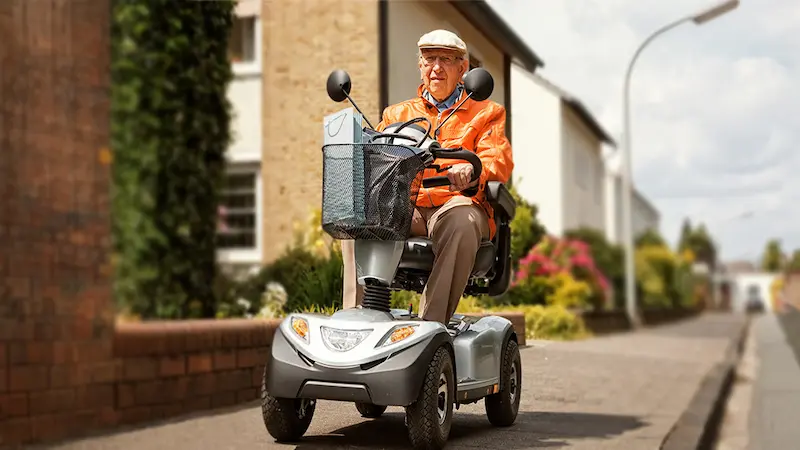
Maximizing Medicare Benefits for Senior Mobility Scooter Users
As the population ages, the importance of ensuring senior citizens retain mobility and independence becomes increasingly critical. For many seniors who have limited mobility, mobility scooters serve as a vital tool for enhancing quality of life. However, understanding how to maximize Medicare benefits for mobility scooter usage can be complex. This article aims to provide an overview of how seniors can navigate Medicare provisions to make the most of their mobility assistance devices.

Smart Tips for Seniors to Find the Top Used Car Deals
As a senior looking to purchase a used car, you're in a unique position. With years of life experience under your belt, you have the wisdom to make informed decisions. However, the used car market can be complex and occasionally deceptive, and there are many factors to consider to ensure you get the best deal possible. This guide provides practical advice to help you navigate the used car market confidently and secure a reliable vehicle at a great price.
