The MC34063 is a versatile DC-DC converter IC widely used in electronic applications. Known for its efficiency and cost-effectiveness, it plays a crucial role in powering various devices by providing step-up, step-down, or voltage-inverting capabilities. In this article, we dissect the functionalities, applications, and importance of the MC34063, offering a thorough exploration for both industry professionals and enthusiasts.
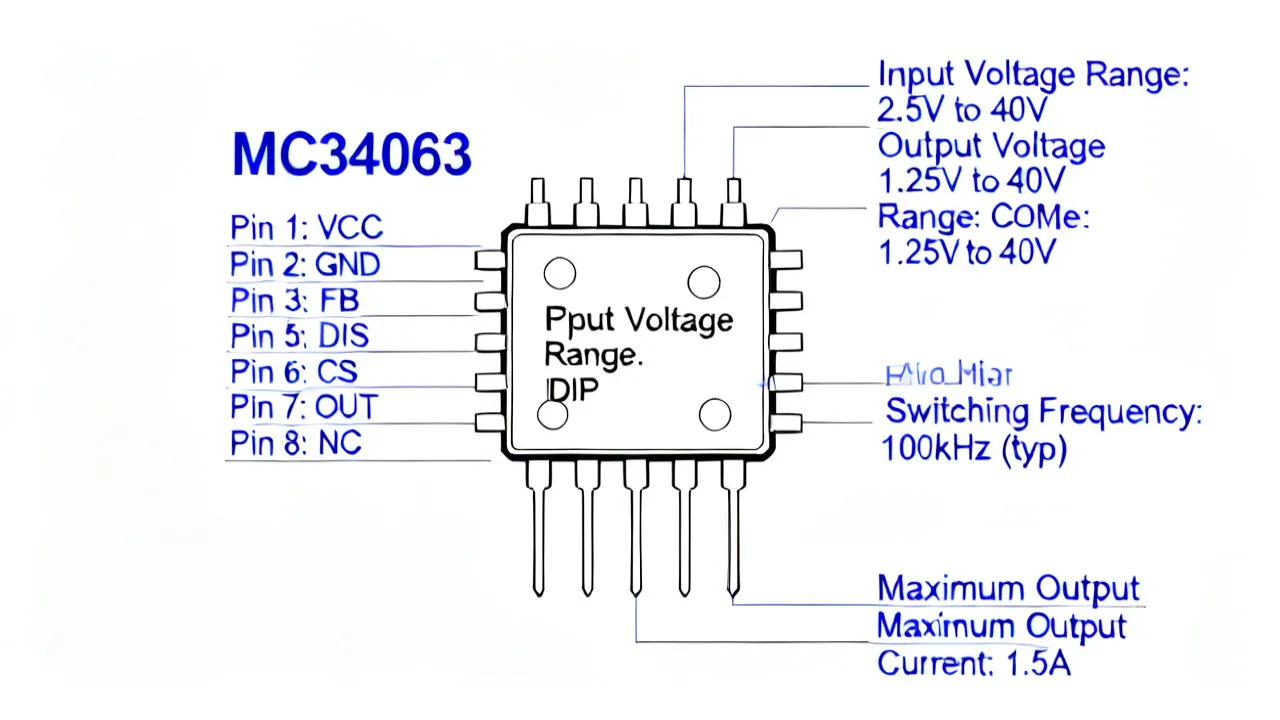
The MC34063 integrated circuit is a staple in the realm of DC-DC conversion, offering flexibility and affordability for designers requiring voltage regulation in their electronic projects. Originating from Motorola Semiconductor, this component is now a standard in the industry, available from various suppliers like Texas Instruments and ON Semiconductor. Its adaptability to step-up, step-down, and voltage-inverting configurations makes it an indispensable tool for engineers around the globe. The continued relevance of the MC34063 is a testament to its rugged design and ease of use, attributes that have cultivated a loyal following from both hobbyists and experienced engineers throughout the years.
At its core, the MC34063 operates by switching an external transistor at a regulated frequency to achieve the desired voltage conversion. This capability is pivotal in modern electronics, where battery life, efficiency, and compactness are of paramount importance. The chip supports input voltages ranging from 3V to 40V and can deliver up to 1.5A of output current, balancing between power efficiency and size constraints within electronic devices. The choice to utilize a switching regulator, such as the MC34063, can lead to significant efficiencies compared to linear voltage regulators, particularly in cases where voltage drop across the regulator is substantial. This efficiency is critical for battery-operated devices, ensuring longer usage times and reduced energy waste.
The numerous applications of the MC34063 IC span a wide range of electronic devices, from simple battery chargers to complex power management systems in communication devices. Its ability to handle multiple configurations allows designers to create efficient power solutions for both consumer electronics and industrial systems. For instance, in telecommunications, the MC34063 is often used to maintain stable voltages for sensitive components, ensuring reliable performance in fluctuating power conditions. Furthermore, its cost-effectiveness makes it a favorite among hobbyists and professional engineers alike, providing an accessible solution for prototyping and product development.
Moreover, as renewable energy sources grow in popularity, the MC34063 also finds a place in solar-based applications. For instance, it can be employed in solar battery chargers, effectively managing the conversion of variable solar panel outputs into stable charging voltages for batteries. The ability to step up or step down voltages makes it versatile enough to be utilized across different types of solar energy systems, adapting to the needs of each specific design.
| Feature | Specification |
|---|---|
| Input Voltage Range | 3V to 40V |
| Output Current | Up to 1.5A |
| Operating Frequency | 100 kHz (typical) |
| Efficiency | Typically 85% or higher |
| Package Types | DIP-8, SOIC-8 |
| Temperature Range | -40°C to 125°C |
When designing a circuit with the MC34063, strategic component selection and PCB layout are critical. The design process usually begins with identifying the input and output voltage requirements. From there, choosing the right inductor and capacitors is essential, as these components play a significant role in the converter's efficiency and stability. For optimal performance, the inductor should be selected based on the desired output current and switching frequency, while the capacitors should be chosen to manage voltage ripple and transient responses effectively.
Engineers must ensure proper heat management and shielding to minimize noise and enhance performance. Proper heat sinking is vital since the efficiency of the MC34063, while good, still results in power dissipation that needs to be managed. Using a larger thermal mass, or ensuring that the device is mounted onto a well-designed PCB that disperses heat, can prevent overheating and ensure long-term reliability.
Additionally, simulation tools can be extremely useful during the design phase. Utilizing software like SPICE can allow engineers to model the behavior of the MC34063 under various load conditions, providing insights into voltage regulation performance and efficiency before committing to physical prototypes. This proactive approach can save time and resources, guiding design decisions with empirical data.
While the MC34063 is celebrated for its robustness, designers must be wary of potential pitfalls, such as ringing in the switching node and thermal management concerns. The ringing effect may lead to voltage spikes that could damage sensitive components downstream. Proper circuit layout, involving short paths for switching currents and adequate heat sink provisions, helps mitigate these challenges. Techniques such as using snubber circuits or dampening components can help reduce ringing and improve overall circuit stability.
Furthermore, understanding the limitations and trade-offs of different configurations can help prevent substantial design iterations. For instance, using the IC in a step-up configuration may provide a different efficiency profile compared to a buck configuration, depending on the load conditions. Designers need to carefully analyze not just the theoretical performance but also the real-world implications of component choices and topology.
Another challenge is related to component tolerances. Since the performance of the MC34063 can be significantly influenced by external components like inductors and capacitors, designers must select parts that not only meet nominal specifications but also account for tolerances and temperature variations during operation. This careful planning underpins the manufacturing process and ensures that the final product meets expected performance standards.
The demand for efficient power management solutions continues to drive innovation in integrated circuit designs. The MC34063 remains relevant due to its simplicity and adaptability, even with the advent of newer, more integrated DC-DC converter solutions. Its widespread availability and open documentation mean that it continues to be a go-to component in both legacy and new designs.
As industries advance towards more sophisticated power management systems, the MC34063 finds itself continually reintegrated into diverse applications, ranging from consumer electronics to industrial automation systems. The push for miniaturization and integration has also led to an emphasis on developing more compact and efficient power solutions, which play a crucial role in the ongoing transformation of IoT devices, wearables, and other connected technologies.
The growth of electric vehicles (EVs) and the increasing adoption of renewable energy sources also frame discussions around the MC34063. As power systems become more decentralized and renewable-driven, the ability of the MC34063 to efficiently manage fluctuating energy inputs while maintaining stable outputs is invaluable. Engineers are looking towards integrating these types of converters as part of larger power management ecosystems that prioritize efficiency and sustainability.
When evaluating various DC-DC converter options, it’s essential to compare the MC34063 with newer architectures like the LM2596 or the TPS563201. While each has its own set of advantages, understanding the specific use cases for the MC34063 can reinforce its continued use. With a maximum output current of 1.5A, it is well suited for applications where size constraints are paramount and where quick prototyping or cost is a primary factor.
The MC34063 can excel in designs where the operating conditions are stable and predictable, thanks to its linear control mechanism. Conversely, more modern converters may offer better efficiency at higher loads and an easier design implementation due to integrated components like MOSFETs.
Other factors to consider include thermal performance and the ease of implementation. The MC34063 may require more external components and careful layout considerations compared to its more integrated counterparts, yet for low-power applications or when prototyping, it continues to provide value not easily matched by more sophisticated designs. Each design choice must converge upon the specific requirements of the project, acting in accordance with performance and cost considerations.
The landscape of DC-DC converters is evolving continuously, and as technology advances, we see emerging trends that could reshape how components like the MC34063 are integrated into designs. One significant trend involves the move towards digital power management systems, where digital controllers enable more accurate and flexible power delivery tailored to device needs.
Furthermore, advancements in semiconductor materials, such as the incorporation of gallium nitride (GaN) and silicon carbide (SiC), are set to enhance the efficiency and power density of DC-DC converters considerably. These materials promise to deliver better performance at higher frequencies, leading to smaller passive components and improved thermal profiles.
Research also continues into optimizing switch-mode power supplies (SMPS) through techniques like synchronous rectification. By minimizing power losses during the switching process, these technologies promise to surpass traditional designs in efficiency, offering compelling alternatives to conventional solutions like the MC34063.
As demand for electric vehicles, renewable energy systems, and battery-powered applications continues to grow, the importance of efficient, reliable power conversion solutions can only be expected to increase. Manufacturers are likely to explore innovative control strategies and hybrid designs combining both analog and digital domains, which could redefine how we approach power management in electronics. The MC34063’s adaptability might see it evolving alongside these innovations, facilitating continued relevance in the ever-changing landscape of power electronics.
The MC34063 remains a quintessential component in the toolkit of engineers and designers, balancing cost-effectiveness with robust performance. Its versatility across a range of applications, combined with a straightforward implementation process, ensures that it will maintain a place in both new designs and retrofitting of older systems. As industries push towards more efficient and sustainable solutions, the fundamental principles underpinning the MC34063 serve as a strong foundation for future developments.
Understanding this integrated circuit's core functionalities and design principles can greatly enhance the prospects of successful implementations in real-world applications. So whether you are building a simple device at home or developing complex industrial systems, leveraging the MC34063 effectively can result in significant improvements in performance and efficiency.
The MC34063 IC is primarily used for DC-DC conversion in electronic applications, providing flexibility in stepping up, stepping down, or inverting voltage levels. It is popular in various applications, including automotive, industrial, and consumer electronics.
While it is highly efficient, the MC34063 is intended for moderate power applications with an output current of up to 1.5A. For high power applications, other DC-DC converters may be more appropriate, as they are designed to handle higher current levels without compromising efficiency or reliability.
Yes, there are newer DC-DC converter ICs with integrated MOSFETs and higher efficiencies, but the MC34063 remains popular due to its cost-effectiveness and versatility. Alternatives may offer additional features such as better thermal performance, increased output current, and lower noise levels, making them suitable for a wider range of applications.
The MC34063 typically achieves efficiencies of around 85%, while many modern converters can exceed 90% to 95%. However, for many applications where cost is a major consideration, the MC34063 provides an effective balance between price and performance, especially in scenarios where efficiency is less critical.
Best practices include careful selection of external components, ensuring proper thermal management, and following good PCB layout techniques to minimize noise and ringing. Additionally, simulations and testing can help validate the design before production to ensure reliability and performance meet specifications.
Striking the Perfect Balance: Navigating Premiums and Out-of-Pocket Expenses in Senior Insurance Plans

Explore the Tranquil Bliss of Idyllic Rural Retreats

How to Make Lasting Memories at Disneyland Attractions

Affordable Phones and Plans for Seniors

Affordable Full Mouth Dental Implants Near You

Unlock the Top Kept Secrets to Finding Your Ideal Dentist for Flawless Dental Implant Results!

Discovering Springdale Estates

The Guide to Car Trading

Affordable Cell Phones Without Plans


Understanding Rlock Advpl in Business
Rlock Advpl represents a pivotal advancement in business software solutions, offering enhanced security and efficiency for enterprise resource planning systems. This article delves into the intricacies of Rlock Advpl, its application in modern businesses, and the benefits it offers in streamlining operations and safeguarding data. As an expert tool, Rlock Advpl is essential for businesses looking to optimize their IT infrastructure.

Unveiling Atranet Innovation
Atranet represents a cutting-edge concept in networking technology. Harnessing its capabilities can transform digital communication by providing seamless connectivity. Designed to optimize data transfer, security, and efficiency, Atranet is shaping the future of how we connect and share information. This article delves into its structure, applications, and potential impacts on industry practices and consumer experiences.

Understanding Polysulfide Adhesive Applications
This comprehensive guide explores the applications and benefits of polysulfide adhesive, highlighting its unique properties and widespread use in construction, aerospace, and automotive industries. Known for its flexibility and resistance to various environmental factors, polysulfide adhesive is a key component in sealing and bonding applications, providing durability and reliability in demanding conditions.

Comparing Vtex with Salesforce Commerce
This article provides an in-depth comparison between Vtex and Salesforce Commerce, two leading digital commerce platforms. Each offers unique features suited to different business needs. Vtex is renowned for its collaborative commerce approach, while Salesforce Commerce shines with its comprehensive customer relationship management capabilities. Explore their differences, strengths, and insights from industry experts.

Understanding the Latest Chrome Version
This article delves into the intricacies and features of the latest Chrome version. Chrome, developed by Google, is one of the very popular web browsers globally, known for its speed, simplicity, and security features. Each update aims to enhance user experience through improved functionality and performance. Understanding these updates is crucial for both everyday users and developers.

Maximizing Benefits of Solar Panels: Costs and Energy Efficiency
Solar panels can save money and energy. Discover how to optimize installation for maximum benefits.