If you’re planning to get a New Phone, this guide explains how government-supported wireless programs work, what providers typically offer, and how to apply. It also outlines eligibility standards tied to income and public assistance participation, then compares major Lifeline/ACP-based options. You’ll find an expert checklist for choosing between device options, service limits, and add-on fees, plus practical FAQs.
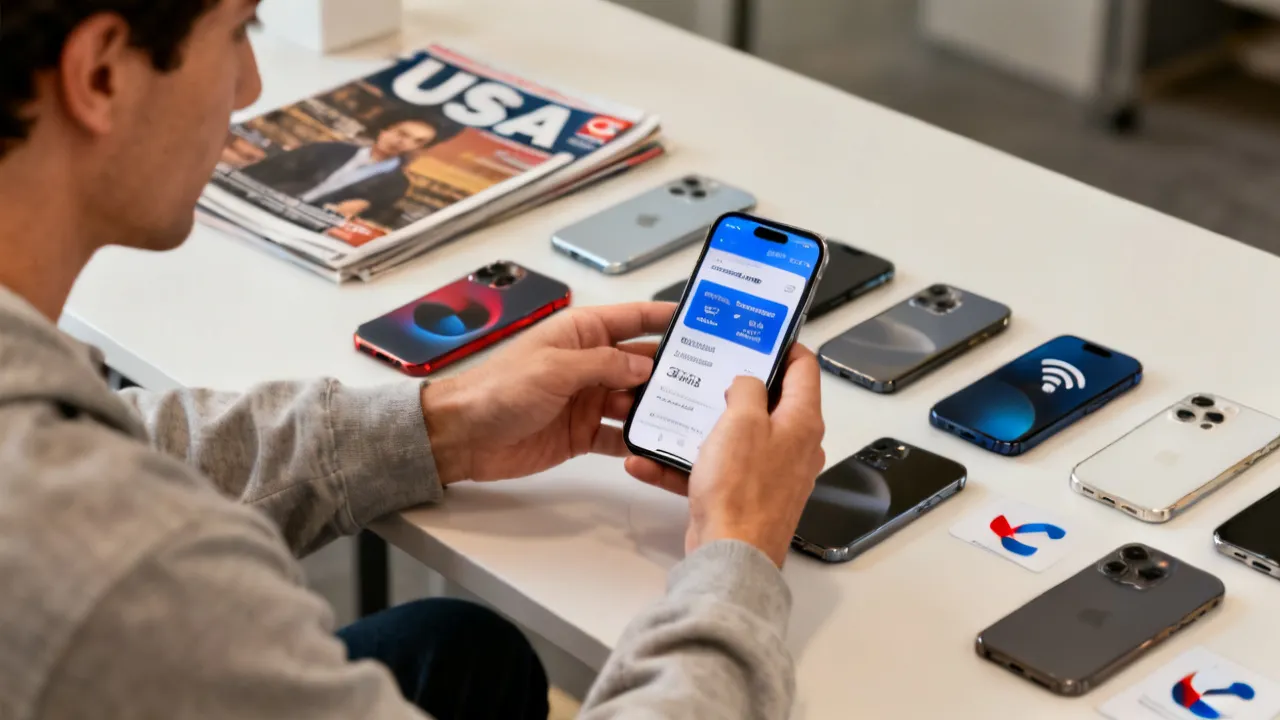
If your goal is I Need a New Phone, the most important decision is not just which provider looks appealing—it’s understanding how government-supported wireless programs pair device eligibility with service allowances, and what conditions determine whether you can enroll smoothly. In practice, the top outcomes come from preparing documents early, confirming coverage expectations for your area, and choosing between device-included plans versus bring-your-own-device (BYOD) options.
When you’re stressed about access—job applications, school updates, healthcare messaging, emergency contacts, and two-factor authentication—small delays can feel huge. That’s why this guide focuses on the “before you apply” steps: verifying eligibility pathways, understanding plan limitations, and reducing the most common sources of application failure (missing documents, household mismatches, activation problems, and confusion about add-ons).
Below, you’ll find (1) a more detailed provider comparison, (2) step-by-step application guidance designed to minimize friction, (3) eligibility requirements summarized for informed planning, and (4) an industry-style evaluation framework for selecting a suitable smartphone plan.
Different Lifeline/ACP-linked programs vary by state, device availability, and plan structure. Still, the core pattern is similar: a monthly voice/text service tier plus a limited data allowance (often with optional upgrades or data boosts). The table below summarizes typical services and potential additional package costs. Because program offers can vary by location and time, think of this as a structural map: voice/text is usually the baseline; data is the main variable; devices and higher tiers are often constrained or offered as optional upgrades.
| Provider (official site) | Typical services included | Potential additional package costs |
|---|---|---|
| SafeLink Wireless | Unlimited text and calls; data allowances that vary by plan/state; smartphone availability often depends on inventory; may offer a BYOD path | Premium device upgrades and certain data enhancements may require payment |
| Assurance Wireless | Affordable Android smartphone option (when offered); unlimited talk/text; data allowances depend on program tier/state | Optional upgrades such as higher high-speed data or add-on services may involve charges |
| StandUp Wireless | Smartphone or BYOD options; unlimited talk/text; data plans aligned with program benefits | Premium phone upgrades or extra data commonly offered for a fee |
| Access Wireless | Unlimited voice and text; limited high-speed data associated with Lifeline/ACP-linked benefits | Data boosts and device upgrade options may incur additional costs |
| True Wireless | Government-supported phones and voice/data service tiers; plan details depend on qualification and current offerings | Better-device options and additional data plans may require payment |
Information sources: the provider-level details typically come from each provider’s published program pages. Use the official links after the table for the most current offers and to confirm what is included in your exact state or ZIP code.
Useful context before choosing a provider: even if two providers look identical on paper, the practical experience can differ. One provider might have a stronger device selection for your needs (or better in-stock models), while another might make BYOD activation easier for your exact phone type. Some providers are also more explicit about what “high-speed data” means (for example, whether it is time-limited, volume-limited, or throttled after a cap). Your goal is to find the provider that matches your real usage pattern—not just the one with the most attractive headline.
source: [www.safelinkwireless.com](www.safelinkwireless.com)
source: [www.assurancewireless.com](www.assurancewireless.com)
source: [standupwireless.com](standupwireless.com)
source: [www.accesswireless.com](www.accesswireless.com)
source: [www.gotruewireless.com](www.gotruewireless.com)
Very readers who say I Need a New Phone are trying to solve two problems at once: (a) getting the device without a large up-front payment and (b) obtaining reliable monthly connectivity for essentials like school, job searching, healthcare communications, and two-factor authentication. Government phone programs address both, but eligibility is tied to specific criteria.
Common eligibility patterns include income-based thresholds and participation in certain assistance programs. While rules can vary by state and program year, the broad framework below is widely used for Lifeline and ACP eligibility planning.
Important distinction to understand early: eligibility is usually not “for the phone” as a generic item. Eligibility is for the program benefit (service and possibly a device offer) and then the provider applies that benefit to a plan configuration. That’s why you should confirm (before applying) whether you qualify via income or a public assistance program, and then choose the most document-friendly path. Some people qualify through multiple categories; others only qualify through one specific channel. If you have multiple options, it can be worth selecting the one with the easiest verification documents.
Many people hear “government phone program” and assume one single benefit covers everything. In reality, there are at least two major federal initiatives often referenced: Lifeline (focused on affordable communications) and ACP (focused on affordability of broadband and mobile connectivity). Providers may offer plan designs that reflect one program, the other, or combined configurations depending on the current program administration and the state’s deployment model.
From your practical perspective, the key is not the policy detail—it’s how it affects your plan’s data allowance and what you receive during enrollment. Your best approach is to focus on the outcome you need (voice/text reliability; usable data for the apps you rely on) and read the plan’s data speed and cap language carefully.
Income-based eligibility generally requires you to show that your household income falls below a program threshold expressed as a percentage of the federal poverty guideline. Common thresholds you may see discussed include 135% for Lifeline and 200% for ACP. However, these numbers can be updated over time and can vary by program administration. So treat them as a planning reference—not an absolute guarantee.
When using income documents, be mindful of timing. Some providers require documents that show recent income (or current eligibility). If your documents are older than required, verification can fail and your application can be delayed.
Many households qualify because they participate in public assistance programs. Common qualifying programs include Medicaid, SNAP, SSI, and FPHA (eligibility depends on the program rules and whether your state and provider accept that verification route).
If you’re in one of these programs, it can reduce complexity—because instead of proving exact income figures, you can provide proof of participation or eligibility confirmation through program records.
One of the most common “silent failure” reasons is not that you’re ineligible—it’s that your submitted household information doesn’t match what the verifier expects. That can happen if:
Before you start an application, gather your identity details (name spelling, date of birth), your program participation documentation (if applicable), and your current address details. Consistency reduces verification mismatches.
Applicants residing on Tribal lands may have additional benefits or simplified considerations depending on the program structure and provider operations. If this is relevant for you, look for provider instructions explicitly addressing Tribal eligibility. Even if the base eligibility is similar, the verification steps or benefit handling can differ.
Before you apply for a new phone through a government-supported wireless program, think like you’re preparing for a “verification interview.” The goal is to have everything ready so you can complete the online form in one sitting (or at least avoid multiple rounds of missing uploads).
Practical note: if your current phone is broken and you’re unable to access email or SMS, try to set up an alternative method before you apply (for example, having a family member’s email accessible, or using a reliable email account you control). Many verification flows use contact messages to confirm or update enrollment status.
At an expert level, the biggest application bottleneck is not the submission—it’s missing documentation, mismatch of household information, or delays caused by verification timing. Here’s a practical, step-by-step approach you can use to reduce friction when seeking a new phone through government-supported wireless benefits.
If you’re applying with urgency, you should treat the process like time-sensitive logistics:
Also consider that delivery times vary. Even if eligibility approval is fast, device shipping can slow the timeline. If you’re facing deadlines (job interviews, school registration, benefit renewal windows), decide whether a temporary solution is needed while the program device arrives.
When people search for a New Phone option, they often expect a single, total price of “nothing.” In real-world program implementation, the service benefit can be robust, but optional upgrades can introduce costs. Many applicants are surprised not by the base plan, but by upsells that appear after approval or during checkout-like steps.
Across the providers summarized, potential additional charges may include:
Expert tip: Before you confirm any order or checkout screen, read the line-item labels for “upgrade,” “add-on,” or “enhancement.” If a screen offers a “premium” phone, treat it as an optional commercial transaction layered over the program benefit.
How to avoid surprises when using online forms:
What “limited high-speed data” usually means in practice: Many plans include a certain amount of high-speed data and then throttle speeds after you reach that allowance. That might still be usable for messaging and light browsing, but it can be slow for video streaming or large downloads. If you rely on video calls or streaming services, you should consider how you’ll manage data and whether optional boosts are worth it for your schedule.
From a telecom operations perspective, the “top” provider is usually the one that aligns with three factors: (1) device preference, (2) your month-to-month usage pattern, and (3) reliable coverage/service quality where you spend time.
But to choose well, you also need to think beyond the plan marketing. Providers may share eligibility rules, but they don’t all deliver the same user experience. Customer support responsiveness, onboarding clarity, device activation reliability, and the availability of BYOD models can differ.
Some providers emphasize a smartphone selection that fits within the program constraints. Others may offer both smartphone and BYOD pathways. If your phone is currently outdated, broken, or unable to run required apps, getting a device from the program can reduce downtime.
However, device selection may be limited by inventory. If you need a phone urgently, check whether the provider offers quick shipping or immediate activation for BYOD. If you can use your current device, BYOD can let you keep your familiar apps, photos, and saved passwords (as long as your device is compatible).
Decision questions to ask yourself:
Government-supported tiers often prioritize unlimited voice and text, with data allowances that may vary by plan and state. For many users, this is sufficient for core needs—messages, calls, maps for short sessions, email, and moderate browsing.
But “enough data” depends on what you do online. A person who uses data primarily for messaging and job searches has different needs than someone who uses their phone as a primary entertainment device or performs frequent video meetings.
Realistic data-use scenarios:
For heavy data tasks (video streaming, large downloads, constant hotspot use), you may exceed high-speed caps. In that scenario, you should plan for throttled speeds or consider optional data boosts if offered. Avoid assuming your plan includes unlimited high-speed data unless the provider explicitly states it.
Even when plans are eligible, real-world performance depends on network coverage and congestion. Before committing, consider:
Practical approach: If you already have a SIM-capable phone on a related network, do a short test in the places you rely on very. Alternatively, use a coverage map and then confirm with real experience by checking signal strength in the building where you spend the most time.
Why this matters: even if you have “enough” data on paper, network congestion and weak indoor signal can make apps feel unusable. If you receive voice calls but data fails, you might experience delays in verifying accounts, uploading job documents, or using telehealth portals.
From a consumer-impact standpoint, activation reliability is as important as plan benefits. Some providers are smoother for BYOD activation, while others require more setup steps. If you want the least hassle, consider:
When you’re doing this from a phone you’re replacing, it helps if the onboarding process offers clear messaging about what to do next and where to check status.
When you choose a program device, you’re not just selecting hardware—you’re selecting an operating system, a screen size, a camera quality (for ID verification uploads), and whether your apps will run smoothly.
Before accepting a device, consider:
If you have a device already and it meets your app needs, BYOD might be the simplest route. If your current device can’t run required apps or you need a device with better performance for secure logins, a program device can resolve that barrier.
Use this simple framework to choose your path. The point is to match the plan strategy to your actual constraint.
It typically means the provider participates in a government-supported assistance structure (often Lifeline and/or ACP), where eligible households receive a subsidized service plan. Many participants also receive a device offer, while others may choose to bring their own compatible phone. The exact service level depends on eligibility verification and current plan configurations in your state.
Yes. Very providers associated with Lifeline-linked offerings support online applications. The timeline depends on verification and documentation review, so submitting complete documents as early as possible can help reduce delays. If you have missing documents or a mismatch in your household details, processing can take longer even if your eligibility is otherwise correct.
No. Eligibility approval and device availability depend on program rules, verification outcomes, and current inventory or plan configurations. Some cases may result in service activation without the exact device model initially expected. If getting a device quickly is essential, consider confirming device availability through the provider before or while applying.
The core benefit typically covers essential service as defined by the program. However, optional upgrades (premium device selection, higher data tiers, international calling, data boosts) may involve additional costs. Always review upgrade prompts and finalize only what you intend to purchase. If you’re seeing options to upgrade, read carefully for the price and for what changes in service.
Very providers require identity details and proof of eligibility. Proof may come from qualifying public assistance participation or income documentation. The exact list of documents can differ by provider and state, so confirm on the official application page. Prepare your name, date of birth, address, and any program verification documents in a readable format so you can upload quickly.
In many cases, yes—some providers support BYOD. You must ensure your device is compatible with the program’s activation requirements and the provider’s supported network configurations. You may also need an eligible SIM/eSIM process, and your device might need to be unlocked depending on provider requirements.
Lifeline generally focuses on baseline voice/text connectivity support and data allowances for eligible households. ACP is commonly associated with additional affordability support for broadband/mobile connectivity under its own eligibility framework. Providers may offer program configurations that reflect one or both structures depending on current program administration. For you, the practical outcome is your plan’s included data and any optional enhancements.
This can happen due to activation steps not being completed, incorrect SIM installation, or delayed provisioning. Review the provider’s activation instructions carefully. If instructions were sent to email, check spam/junk folders. If you used the wrong email/phone for contact during the application, you may miss critical activation notifications.
A denial can occur for eligibility verification reasons (incorrect documentation, mismatched household info, or documents that don’t meet requirements). If you receive a denial notice, follow the provider’s guidance for appeal or resubmission. Often, issues are fixable—like uploading a clearer document, correcting household details, or providing alternative proof if you qualify via a different category.
This approach is especially helpful when you’re dealing with urgency—repairing access to job applications, emergency contacts, and school communications often has a direct impact on daily life.
Search terms like I Need a New Phone commonly reflect a real constraint: device affordability and recurring connectivity costs. Government-supported programs are designed to reduce the barrier to communication by subsidizing service and, in many cases, the device itself for qualifying households. The provider landscape typically includes multiple brands operating under similar eligibility principles, with plan structures that can differ in device tiers, data allowances, and upgrade options.
From a consumer-protection standpoint, the most reliable way to benefit from these programs is to align expectations with the plan’s allowance structure—especially around data speeds and optional add-ons—while following official application and verification steps.
Why the “before you apply” phase matters so much: in consumer telecom enrollment, delays are not always caused by eligibility. They’re often caused by logistics: document readiness, verification mismatches, coverage misalignment, or selecting a device path that doesn’t fit your timeline. Preparing early helps you avoid the worst scenario—getting approved but then not having a functioning device on time.
How to think about your “must-have” uses:
1). The above information comes from online resources, and the data is as of October 2023.
2). This website cannot guarantee that applicants will definitely get a government affordable phone. For specific application requirements and how to obtain it, please refer to the official requirements of the provider. This website will not be updated in real time.
https://www.safelinkwireless.com
https://www.assurancewireless.com
https://standupwireless.com/
https://www.accesswireless.com
https://www.gotruewireless.com/
https://www.fcc.gov/lifeline
https://www.fcc.gov/affordable-connectivity-program
Striking the Perfect Balance: Navigating Premiums and Out-of-Pocket Expenses in Senior Insurance Plans

Explore the Tranquil Bliss of Idyllic Rural Retreats

How to Make Lasting Memories at Disneyland Attractions

4rkojvsx Technology: Industry Insights and Buying Guide
Affordable Phones and Plans for Seniors

Affordable Full Mouth Dental Implants Near You

Unlock the Top Kept Secrets to Finding Your Ideal Dentist for Flawless Dental Implant Results!

Discovering Springdale Estates

Unveiling RS Sul Telecom Services

Affordable Phones and Plans for Seniors
Discover the top deals on new phones and plans tailored for seniors, including discounts on 5G technology and unsold models.
Affordable Cell Phones Without Plans
Discover affordable cell phones for sale without plans, exclusive discounts for seniors, and tailored mobile plan options in your area.

Navigating Government Phone Programs
This guide provides an expert analysis of government-supported phone programs for eligible individuals, offering insights into available providers and their services. Affordable phones are often a necessity for individuals under economic constraints, aiding in communication, job searches, and access to emergency services. The article delves into eligibility criteria, application processes, and compares popular service providers in various regions.
Unlocking the Top Cell Phone Deals
Discover unbeatable cell phone discounts, plans, and offers for seniors and iPhone enthusiasts without contracts.
Navigating Affordable Phone Offers
Discover the essential details about government-assisted phone programs aimed at providing budget-friendly devices to eligible individuals. These programs offer complementary mobile phones and services to qualified beneficiaries, ensuring connectivity at minimal expense. This guide breaks down how to access such benefits and what conditions apply.
How to Apply for a Affordable Phone
This guide provides insights on how to apply for a affordable phone through government-sponsored programs. Understanding how these programs operate and their eligibility requirements is essential. These initiatives aim to support individuals in low-income households or those enrolled in specified government assistance programs by providing basic communication tools.