This guide explains how Payment Processing Systems work, what to evaluate, and how to reduce operational risk when choosing a provider. It discusses background concepts like authorization, settlement, chargebacks, compliance, and reconciliation, using an objective lens to help decision-makers compare options without relying on hype or unverifiable claims.

Payment Processing Systems are the operational backbone behind card and digital payments—converting an online or in-store purchase into authorized transactions, settled funds, and reconciled accounting records. The top approach is not to chase “more features,” but to evaluate how a provider handles security, payment lifecycle orchestration, reporting quality, and chargeback workflows. For organizations comparing vendors, the safest path is to confirm requirements upfront—especially around PCI compliance scope, dispute management, settlement timing, and integration responsibilities—so the system you implement matches your actual risk profile and operational capacity.
In most businesses, payment execution is only a visible moment; the real work happens before and after the customer presses “Pay.” Payment processing typically involves:
From an industry perspective, system performance is rarely judged by whether cards “work” on day one. It is judged by consistency under real conditions: peak traffic, recurring billing schedules, refund reversals, bank holiday settlement patterns, and operational responsiveness when exceptions occur.
That is why many teams shift from asking “Does it process payments?” to asking “How much operational overhead does it create when something goes wrong?” A Payment Processing System can be technically compliant yet still operationally painful if it provides ambiguous status updates, weak reporting, or slow dispute workflows. Reliability and operational fit often determine long-term success more than baseline transaction acceptance.
A robust Payment Processing System should clearly support the full payment lifecycle you use—single purchase, installment-like flows, recurring charges, and refunds. Ask how the platform distinguishes between authorization and capture, how it handles delayed captures, and what tooling exists for idempotency (preventing duplicate charges when network errors occur).
In practice, the lifecycle includes several states that can feel subtle to business stakeholders but are critical to engineering and finance:
When evaluating Payment Processing Systems, ensure the provider describes these semantics clearly and offers test guidance. Teams that treat lifecycle states as “mostly the same” often discover later that they are forced to implement brittle workarounds—such as manual dispute creation, ledger adjustments, or custom reconciliation scripts—because the system does not behave consistently under exceptions.
Security is not only a technical attribute; it is an operational obligation. PCI DSS is the widely recognized framework for organizations that store, process, or transmit card data. As a practical matter, your “scope” depends on where card data is handled. Many solutions aim to reduce exposure through tokenization and secure hosted fields, but you still need written confirmation of responsibility boundaries.
One common procurement failure is assuming that “tokenization” automatically eliminates PCI scope for all parts of your stack. Tokenization can significantly reduce scope, but only if implemented correctly and only for the components intended to be out-of-scope. For example, if your application inadvertently logs PAN-like data, stores sensitive fields, or transmits card data through a non-approved path, the theoretical reduction in scope may not hold. Therefore, you should insist on:
Relevant source: The PCI Security Standards Council provides the PCI DSS framework and guidance on its applicability. Source: PCI Security Standards Council (PCI DSS Overview and related materials).
Additionally, modern payment security extends beyond PCI DSS. Even if a provider maintains the strictest certification, your organization still needs operational controls: access management, vulnerability patching processes, secure software development practices, and incident response procedures. Payment Processing Systems should come with a clear security posture, including how you receive security advisories and how those advisories map to your responsibility.
Fraud tooling should be tailored to your product category, average order value, and customer behavior. For example, a subscription business benefits from tools that understand account history and recurrence patterns; a travel merchant may require better handling of delayed delivery and traveler-initiated disputes. Evaluate whether the provider offers configurable rules, velocity checks, device signals, and 3D Secure orchestration—then confirm how those tools affect conversion rates.
However, “fraud controls” are not only about blocking bad transactions. They also influence:
When assessing fraud features, ask for measurable outcomes: what metrics does the provider track, how do you tune rules safely, and what is the recommended rollout approach? For many teams, a staged rollout (monitor-only mode first, then gradual enforcement) is crucial because the cost of a misconfigured fraud rule can show up as a sudden conversion drop or increased manual review queue.
Relevant sources: Industry practice often references guidance from payments regulators and card network standards. For example, 3D Secure considerations are described broadly by the EMVCo ecosystem and major network documentation.
Merchants frequently underestimate how difficult reconciliation can be when reporting is incomplete or inconsistent. A high-quality Payment Processing System should offer clear settlement statements, downloadable transaction-level reports, and consistent identifiers that map authorization records to settlement records.
Reconciliation is not just a finance problem—it touches operations, customer support, and engineering. If a charge is partially captured, then refunded, then disputes occur, your finance team needs enough data to create accurate ledger entries. Your customer support team needs enough data to answer “What happened?” Your engineers need enough IDs to locate webhooks and payment events that triggered the outcomes.
As a top practice, request sample settlement reports and verify whether:
Also, validate the settlement cadence. Some businesses expect settlement within a predictable schedule, while others might be exposed to longer delays due to verification, cross-border rules, or dispute holds. Ask for:
Without clarity here, finance may discover weeks after go-live that their cash-flow model is inaccurate, causing internal stress and potentially delaying growth decisions.
Chargebacks can be operationally expensive even when fraud is low. The differentiator is not simply “we support chargebacks,” but whether the platform offers:
Also confirm escalation paths and the expected turnaround time to assemble evidence. Many disputes are time-sensitive; delays can reduce the merchant’s effective ability to respond.
Evidence workflows are where payment platforms can help or hinder. A strong approach provides structured data retrieval and evidence preparation. For example, if a dispute claims the customer never received goods, the system should help you connect order data, shipping proof, and delivery timestamps. If a dispute claims card-not-present fraud, the system should help you provide evidence such as authentication results, device/transaction signals (where permitted), and customer communication logs.
In addition, the provider should support:
These features matter because dispute programs improve over time. If you cannot measure which reasons you win and why, you cannot improve operationally. A Payment Processing System should enable continuous learning—not only transaction processing.
Although the request references “price information” and “supplier details,” no specific numeric pricing or named supplier has been provided in the prompt. Therefore, this guide focuses on how to evaluate pricing structures and vendor terms objectively, rather than stating unverified costs. In practice, Payment Processing Systems can be priced using combinations of:
Expert note: The very common pricing mistake is comparing only the headline transaction rate while ignoring cost drivers like refund frequency, dispute volume, and the complexity of integration. A system that is slightly more expensive per transaction can be cheaper overall if it reduces operational effort and dispute losses.
To make pricing comparisons fair, evaluate total cost of ownership (TCO) across at least three dimensions:
Many providers offer flexible terms, but those terms can introduce hidden variability (e.g., fees that differ by payment method, country, card type, or authentication outcome). Ensure your evaluation includes the variability that reflects how your customers actually pay.
When comparing providers, treat the evaluation like a risk-managed implementation project:
If you’re using an e-commerce platform, verify compatibility with your checkout and back-office. If you’re integrating directly, examine API consistency and error taxonomy so your engineers can build reliable payment retry logic.
Beyond features, compare how suppliers handle reliability and change management. Ask:
These questions often reveal differences that matter operationally. A vendor that looks great in demos may still introduce friction if it lacks robust operational support or if it cannot explain how to handle edge cases.
The implementation stage is where many payment programs succeed or fail. Below is a structured approach that aligns with common enterprise rollout patterns.
Map your actual flows: one-time purchases, refunds, voids, captures, subscriptions/recurring, and any region-specific payment methods. Then list the payment events you must support end-to-end.
In this step, involve the business stakeholders who understand customer behavior and the operations teams who know how exceptions are handled. You should capture questions like:
If you do not define these behaviors up front, you risk building a payment integration that only supports the “happy path,” leaving exceptions to become manual processes later.
Document where cardholder data enters your environment and how it is transmitted. Confirm whether your architecture uses tokenization and whether your merchant-side components fall within or outside PCI scope. Align your internal controls with PCI DSS requirements and consult your security team.
Source: PCI Security Standards Council materials for PCI DSS guidance and applicable scope concepts.
To make compliance actionable, build a data map that includes:
Then validate that your monitoring and incident response practices do not leak sensitive information. The most common operational risk is accidental data exposure through verbose logging or support tooling. Ensure your engineering team knows what data is safe to display and what must be redacted.
During testing, confirm how your system behaves under network timeouts, duplicate webhook deliveries, and partial failures. A reliable Payment Processing System should support idempotent operations so your application can safely retry without causing duplicate charges.
Idempotency is not merely a technical detail; it protects customer trust and revenue integrity. In a well-designed integration, a request that times out should be safely retried without duplicating the payment. To validate this, test:
Additionally, design your payment event pipeline with observability. You should store event payloads or at least key identifiers for debugging, implement correlation IDs, and implement clear alerting around webhook processing. Without this, payments may “work” but the team cannot troubleshoot fast enough when customers call support.
Before going live, decide how you will produce evidence: order confirmation, proof of delivery, customer communication logs, refund history, and any service-level documentation. Ensure the workflow aligns with your operational reality and can be executed within dispute windows.
To strengthen dispute readiness, define a dispute playbook. A playbook should include:
A mature dispute program also includes internal reconciliation between your dispute records and the provider’s dispute statuses. Otherwise, you may lose visibility into which disputes are truly open, which are pending evidence, and which have already been won or lost.
Define how each transaction status maps to ledger entries. Validate fee lines, tax handling, refund reversals, and settlement timing. Use test exports to confirm that reporting reconciles with your accounting system.
Reconciliation is easier when the payment system provides stable references and consistent identifiers across lifecycle steps. During integration, establish rules like:
Also confirm how the system represents disputes and dispute losses in reporting. Some providers net chargeback fees into settlement statements; others present them separately. Finance teams need to understand the representation model to prevent month-end corrections.
Set up alerting for declines, authorization failures, webhook processing errors, settlement anomalies, and dispute workflow latency. Ensure there is a documented runbook for incident response.
Operational readiness should include:
During the initial launch, many teams underinvest in monitoring because “the payment team is small.” Yet, payment issues can affect revenue immediately. A Payment Processing System that is stable can still create incidents if the integration mishandles status transitions or if webhooks fail silently. Monitoring reduces the mean time to detect and resolve.
Once stable, tune routing, fraud controls, and payment retries based on objective metrics: authorization rate, refund success rate, dispute outcomes, and operational workload. Optimization should be iterative and testable.
Optimization often includes:
Importantly, optimization must be measured. Teams should decide what success looks like (reduced disputes, improved authorization rate, reduced reconciliation time) and set baselines before major changes.
The table below provides a practical comparison of implementation requirements and verification points. It is intentionally vendor-neutral and designed to help you ask the right questions during procurement and integration.
| Evaluation area | What to verify | Typical conditions/requirements |
|---|---|---|
| PCI scope & security model | Where card data is handled; tokenization approach; responsibility boundaries; encryption practices | Written PCI responsibility statement; architecture review; security testing plan |
| Payment lifecycle support | Authorization/capture behavior; refund and reversal semantics; idempotency support | Defined mapping of statuses; test cases for retries and partial failures |
| Settlement & reporting | Settlement statements; fee line items; report granularity; reconciliation identifiers | Sample report validation; mapping to internal ledger requirements |
| Chargebacks & disputes | Evidence workflow; deadline tracking; reason-code alignment; reporting on outcomes | Operational runbook; evidence template readiness; dispute escalation process |
| Integration & reliability | API/webhook documentation quality; error codes; uptime and incident communication | Sandbox verification; monitoring and retry logic; incident response runbook |
| Fraud controls | Configurable rules; risk signals; 3D Secure orchestration options; tuning process | Fraud policy approved by stakeholders; A/B or staged rollout for conversion impact |
| Pricing transparency | Fee breakdown including refunds/disputes; currency conversion; add-on costs | Side-by-side total cost estimate using your expected volumes and exception rates |
To evaluate Payment Processing Systems responsibly, it helps to understand the underlying payment rails and compliance landscape.
Authorization is a request/response step: it checks whether a transaction should be allowed at that time. Settlement is the later movement of funds to the merchant via the payment network ecosystem. Payment processors orchestrate the operational steps, but authorization/settlement timelines can vary due to issuer behavior, batch schedules, and operational processing rules.
A common confusion is that “authorized” automatically means “money is yours.” In reality, authorization confirms that the transaction is approved and reservable under network and issuer rules, but the funds might not fully move until settlement/capture. Your business should understand how authorization holds affect customer experience and cash flow, especially for high-ticket purchases or orders with delayed fulfillment.
A chargeback is a payment dispute initiated by the cardholder through the issuer. The merchant may need to provide evidence to contest the claim. Dispute outcomes depend on evidence quality, timeliness, and compliance with network requirements. That is why systems should support evidence assembly and tracking—not only submission.
It also helps to understand that disputes are not always purely “fraud.” Sometimes disputes stem from customer dissatisfaction, service failures, delayed shipping, or misunderstandings. Therefore, chargeback reduction strategies often involve operational improvements outside of payments: clear order confirmations, accurate delivery timelines, proactive customer notifications, and efficient refund policies. Payment Processing Systems that provide robust data can enable those operational improvements by providing visibility into what customers are disputing and why.
PCI DSS is intended to reduce risk related to card data compromise. Systems that limit merchant exposure through tokenization and secure hosted flows are often easier to govern. However, reduced scope does not remove the need for governance, monitoring, and security testing—your organization still must maintain a secure operating environment.
Practically, governance includes training, policies about logging, access reviews, and vulnerability management. Many organizations focus exclusively on the payment integration code and overlook surrounding systems such as administrative portals, customer support tooling, and internal analytics dashboards. Those systems often become the accidental place where sensitive data might be viewed or logged. Your Payment Processing System procurement should therefore evaluate not only the payment flow but also the organizational readiness to protect data throughout the lifecycle.
Source: PCI Security Standards Council documentation on PCI DSS structure and applicability.
3D Secure is an authentication framework that can reduce fraud and influence liability handling in certain scenarios. Whether and how 3D Secure is used can affect both security posture and conversion rates. Your payment system should enable thoughtful configuration rather than a one-size-fits-all setting.
In some environments, 3D Secure can add friction by requiring additional customer steps. In other environments, it can reduce fraud and improve dispute outcomes. A mature Payment Processing System should offer enough configuration and reporting to understand the trade-off: what is the incremental lift in authentication success, what is the effect on authorization rate, and how do disputes change when authentication is applied.
To avoid these pitfalls, treat the Payment Processing System implementation like a control system, not just a software feature. You need:
Most payment failures are not total outages; they are state mismatches, missing events, or operational delays that cause customers to wait and support teams to struggle. Planning for “weird” cases early reduces long-term pain.
Payment Processing Systems are the technology and operational workflows that manage how a payment is authorized, captured, settled, and reconciled—often including security, fraud controls, refunds, and dispute handling.
Request documentation that clarifies PCI scope and responsibility boundaries. Review how your environment handles card data, whether tokenization or hosted fields are used, and what security obligations remain for your organization. Align the plan with PCI DSS guidance from the PCI Security Standards Council.
Chargebacks are not fully preventable because they are driven by cardholder actions and issuer processes. A strong Payment Processing System helps by improving fraud screening, enabling accurate transaction records, and supporting timely, structured evidence workflows for disputes.
Use a combination of authorization performance (e.g., authorization rate), operational reliability indicators (webhook delivery health, error rates), dispute workflow performance (evidence submission turnaround), and accounting reconciliation effort. Compare total cost using your real volumes and expected exception/refund rates.
Yes. Good reporting reduces operational time and improves internal controls. It also makes it easier to investigate anomalies such as partial refunds, delayed settlements, or unexpected fee lines.
Plan for duplicate webhook deliveries, network timeouts, retry behavior, transaction reversals, and inconsistent status transitions. Ensure idempotency and build observability into the payment event pipeline.
Ask vendors for a detailed fee breakdown that includes refunds, chargebacks, and any add-on services you need. Then model total cost using your projected transaction volumes, refund ratios, and dispute volumes. This approach avoids comparing only the lowest advertised rate.
Settlement timing strongly affects cash flow and working capital planning. Even if two vendors offer similar per-transaction rates, different settlement cadences, reserve practices, and handling of exceptions can change how quickly you receive funds. When evaluating Payment Processing Systems, request information about typical settlement schedules by region and any conditions that trigger delayed payouts or reserves, then compare them to your cash-flow requirements and operational tolerance for delayed funds.
During evaluation, run a dispute-evidence readiness test. Use representative dispute scenarios (e.g., “customer did not receive goods,” “service not as described,” “duplicate charge,” and “fraud/unauthorized”). Confirm that your operational systems can pull the needed data, that the Payment Processing System can map the scenario to the appropriate reason code and evidence checklist, and that your team can submit evidence within the allowed windows. In addition, test whether dispute outcomes are reported back in a way that supports learning—so your fraud and operations teams can tune processes accordingly.
Create an explicit status mapping contract between the Payment Processing System and your internal domain model. Document what each external state means, how it transitions over time, and what finance should expect for ledger entries at each step. Then validate it with integration tests and sample reconciliations. When both engineering and finance share a single mapping specification, the number of reconciliation surprises decreases significantly.
Require clarity on uptime targets, incident communication procedures, support hours, escalation paths, and how quickly critical issues are addressed. Also ensure the vendor provides clear guidance for how webhooks and APIs behave during incidents. A provider can be “available” yet still fail to deliver webhooks or return incomplete settlement reports. Your SLAs should account for these operational aspects, not only basic uptime.
Regional and payment-method differences can change authorization behavior, authentication requirements, and dispute handling expectations. Your integration should support a consistent internal interface while allowing method-specific configuration where needed. During evaluation, test at least one representative scenario per region/payment method you expect to use, including refunds and disputes, not only new purchase flows. This ensures you are not surprised by different lifecycle semantics when you scale.
Choosing Payment Processing Systems is ultimately a governance decision: you are selecting who coordinates authorization, settlement, security controls, reporting, and dispute handling on your behalf. When you evaluate suppliers using clear conditions and verification steps—especially around PCI responsibilities, dispute workflows, reconciliation quality, and reliable integration—you reduce implementation risk and strengthen your good payment operations. Instead of relying on marketing claims, anchor your evaluation in testable requirements, documented responsibilities, and a realistic model of how payments behave in production.
To make the decision actionable, insist on evidence: sample reports, sandbox behavior tests, architecture reviews, and dispute workflow trials. When vendors cannot provide concrete validation, the risk typically shifts to your team through increased engineering effort, operational workarounds, and delayed financial reconciliation. A strong Payment Processing System should reduce that risk by improving reliability, compliance clarity, and measurable operational impact.
Striking the Perfect Balance: Navigating Premiums and Out-of-Pocket Expenses in Senior Insurance Plans

Explore the Tranquil Bliss of Idyllic Rural Retreats

How to Make Lasting Memories at Disneyland Attractions

Affordable Phones and Plans for Seniors

Affordable Full Mouth Dental Implants Near You

Unlock the Top Kept Secrets to Finding Your Ideal Dentist for Flawless Dental Implant Results!

Discovering Springdale Estates

Unveiling RS Sul Telecom Services

The Guide to Car Trading


Delving into Worldline Issuing
In the evolving realm of digital payments, Worldline Issuing stands at the forefront, providing seamless and secure solutions for card issuance and management. As the payments industry transitions towards more efficient and customer-centric practices, Worldline Issuing offers a comprehensive suite of services tailored to the needs of financial institutions and end-users, enhancing both operational efficiency and security.
Understanding Worldline Issuing Solutions
Dive into the realm of Worldline Issuing, a cornerstone in the fintech landscape that facilitates secure and efficient digital payment solutions. Worldline has established itself as a key player by offering sophisticated tools to streamline financial transactions, thereby enhancing consumer convenience and fostering secure monetary operations worldwide through innovative issuing services.
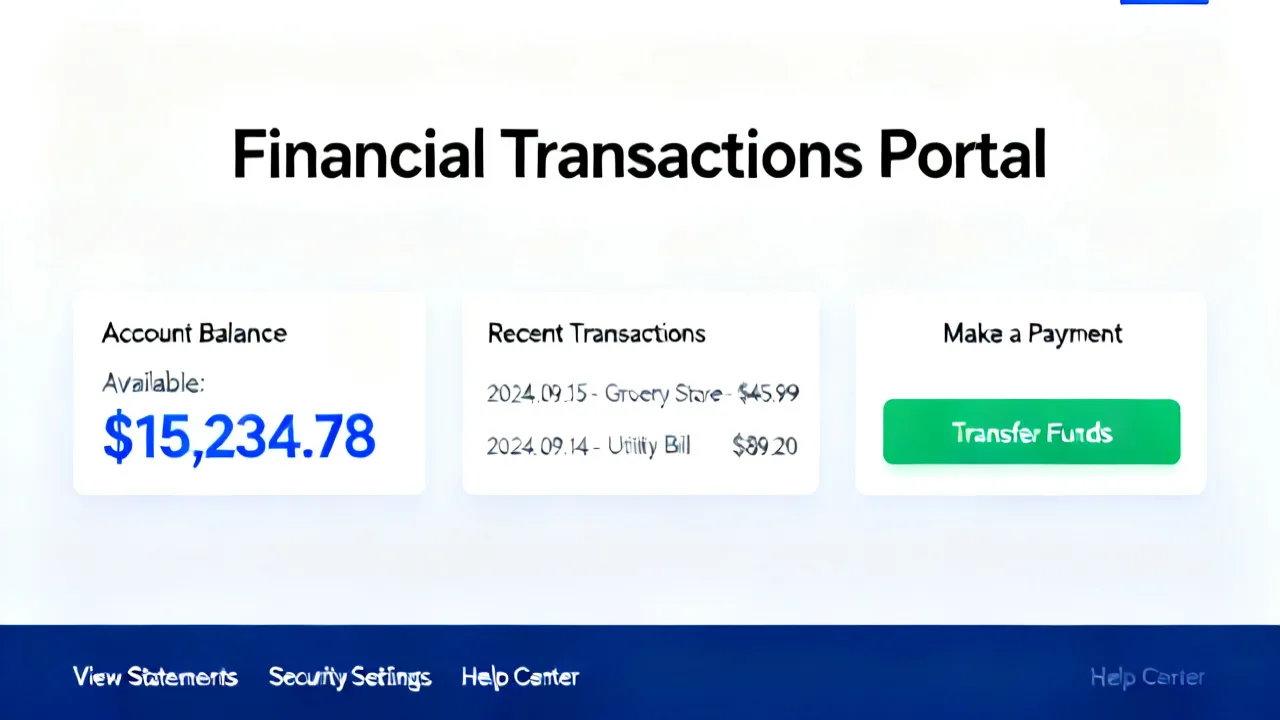
The Comprehensive Guide to Corpay.com
This article delves into the features and benefits of Corpay.com, a key player in the financial transaction space. Known for its innovative solutions, the website offers robust tools for managing financial transactions, making it a valuable resource for businesses and individuals alike seeking efficiency and reliability in managing their financial operations. Explore its offerings to gain a deeper understanding of its industry impact.

Understanding Lifetime Benefits Solutions and How to Choose Wisely
This guide explains how to evaluate Lifetime Benefits Solutions services with a practical, objective lens. It outlines what the keywords typically refer to in benefits planning, why customers compare providers and pricing structures, and how to approach decisions responsibly. You’ll also find a conditions checklist, a comparison table framework, and a set of FAQs to support informed next steps.

Understanding the Impact of 0009968545
This article explores the significance and implications of the keyword '0009968545' within industry and academia. Although '0009968545' might appear as an abstract sequence of numbers to the unaccustomed eye, it potentially represents an International Standard Book Number (ISBN) that could be a crucial reference for numerous academic publications. This analysis examines the potential contexts and influences of this code, offering insights from an expert's perspective.

Digio Livelo: How It Works and What to Compare
Digio Livelo is top understood by comparing how earning, redemption, and service terms align with your goals. This guide explains the background of points-and-rewards ecosystems, typical partner mechanics, and decision factors such as fees, eligibility, transfer rules, and support quality. It’s an objective overview to help you evaluate fit with care.
